
That’s right—I have another new story out in Lightspeed! “Look at the Moon” is a novelette about faith, fate, and stargazing. It’s a story that’s close to my heart: I wrote the first draft in 2016, and it grew along with me. I’m a completely different person now, and it’s is a completely different story, but both our bones are the same. I’m confident that “Look at the Moon” is the best thing I’ve written (thus far).
I’m going to talk more about my inspirations for “Look at the Moon,” but let’s get the rest of the news out of the way first.
My short story “The Last Lucid Day” was featured in Gizmodo, which I am deeply grateful for.
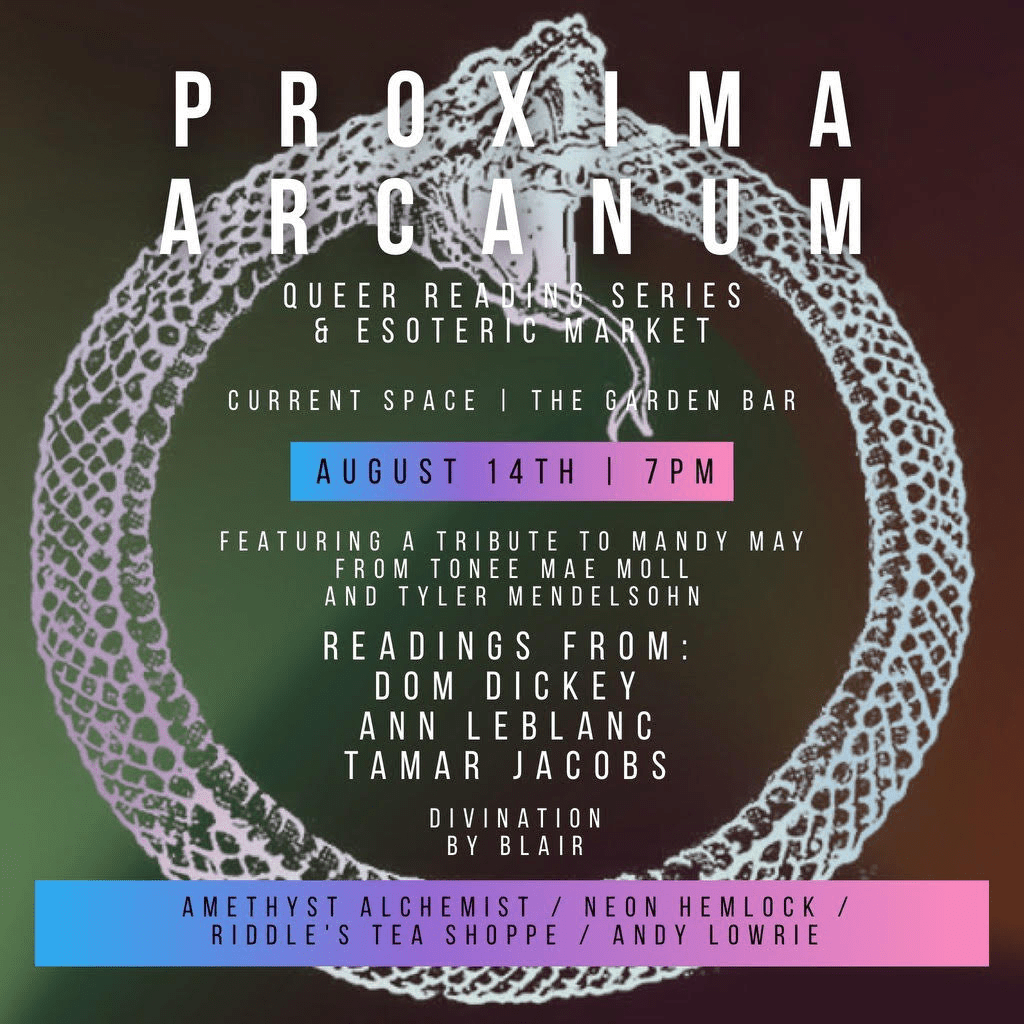
For my folks in Baltimore and its surrounds: I’m reading at Proxima Arcanum tomorrow (Wednesday 8/14) as part of a kickass lineup. The event is at Current Space and begins at 7pm, with readings starting around 7:30. Friends of the blog Amethyst Alchemist and Neon Hemlock will also be there vending. Come through!
Alright, now back to astronomy!
The Grand Experiment
As well as I can recall, my love of astronomy began with the first verse1 of Doomtree’s “The Grand Experiment.” To this day, I love that verse so much that I can’t put the track on playlists—I’ll rewind to hear the beginning again and again. I love it too much to move on to any other song.
We start with these planets waltzing through the darkness
Space is mostly … space. Infinite nothing, with rare clusters of stuff. Everywhere and everyone you’ve ever been exists due to very slim odds. We are here by happenstance.
For a sense of scale, I recommend Josh Worth’s model of the solar system, sized so that the moon is 1 pixel.
Tip the axis, that one’s ours
Relative to the sun, Earth has a 23.5° axial tilt. It’s why we experience seasons. Hell, it’s why life evolved on this rock in the first place. And while astronomers have theories, we might never really know what set us askew.
There is so goddamn much that we don’t know. It is so difficult to sit with the not-knowing. But we exist thanks to the perfect 23.5° tilt of a planetary body in a universe that is mostly not planets. Isn’t that wonderful and terrifying?
Zoom the camera in, cue lights up, dim the stars
Okay, only the first few lines are about the chronology of the universe. The rest of “The Grand Experiment” is about how all of those variables collided to create human life, and then we kinda ruined it with tech-centric capitalism. The universe is great. People often aren’t.
I have only ever lived in cities. I can count on one hand the number of times I’ve seen the night sky without light pollution. The only constellation I can identify is the Big Dipper, and that’s because it’s consistently bright enough to cut through smog. We have, indeed, dimmed the stars.
In 2016, feeling claustrophobic in Los Angeles, I saw a flyer advertising a star party in Joshua Tree. Astronomers with telescopes, binoculars, and cameras, gathered under a clear, dark sky.
I didn’t go to the star party. I did write a story about it, though. Go read it.
And if you want background music, here are more songs that kept me company while I worked on “Look at the Moon” in all its various iterations.
- In addition to sparking a lifelong curiosity about the cosmos, this verse is a masterclass in diction, alliteration, consonance, assonance, euphony, everything. “We choose a king, mine the metals for his forges / to better wage our wars” is such a satisfying series of sounds. I want the whole thing tattooed on the inside of my skull. ↩︎
 Dominique Dickey